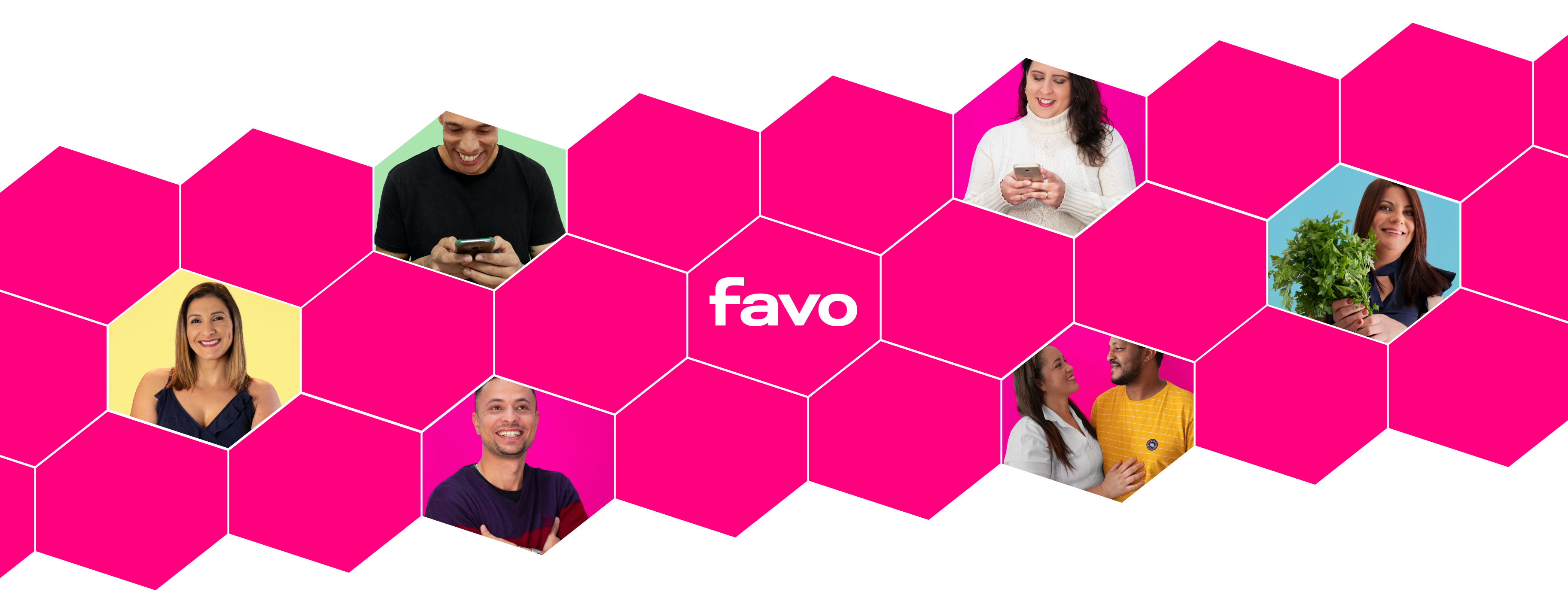
Favo:
rebranded and
built for scale.

Favo is a community-driven grocery commerce business that operates a curated WhatsApp catalog model — local entrepreneurs sell supermarket products to their neighbors, orders are aggregated overnight, deliveries land the next morning. I led design in-house for a year and a half.

RoleLead Designer · Brand & Product (in-house)
TeamDesign lead · cross-functional with brand, product, ops
IndustryCommunity-grocery commerce · WhatsApp social commerce
RegionBrazil & Peru
Duration~1.5 years · 4 work-streams shipped
Favo — the rebrand applied across the partner app, the website, and the operations the company depends on.

Three big
takeaways

  1. 01

    Renamed Aiyu to Favo. Six weeks of workshops, archetype work, and concept tests with the team — wordmark, palette, and voice rebuilt to match the model the company had grown into.

  2. 02

    Four work-streams ran in parallel — rebrand, partner app, website, internal tools — across roughly a year. The partner app ran the whole way.

  3. 03

    From a re-counted zero to 1.2 million customers across Brazil and Peru. NPS climbed from 63 to 86. São Paulo and Lima opened on the same surface.

01. A door-to-door model rebuilt for WhatsApp

A door-to-door model, rebuilt for WhatsApp.

Favo, originally launched as Aiyu, reimagined the door-to-door sales model for the twenty-first century. Local entrepreneurs sold supermarket products to their neighbors through curated WhatsApp catalogs — orders collected through the day, fulfilled by a central hub overnight, delivered the next morning by the same network of resellers. The model worked: the company shipped 700,000 orders in its first year. Investment landed from Global Founders Capital and Elevar Equity.
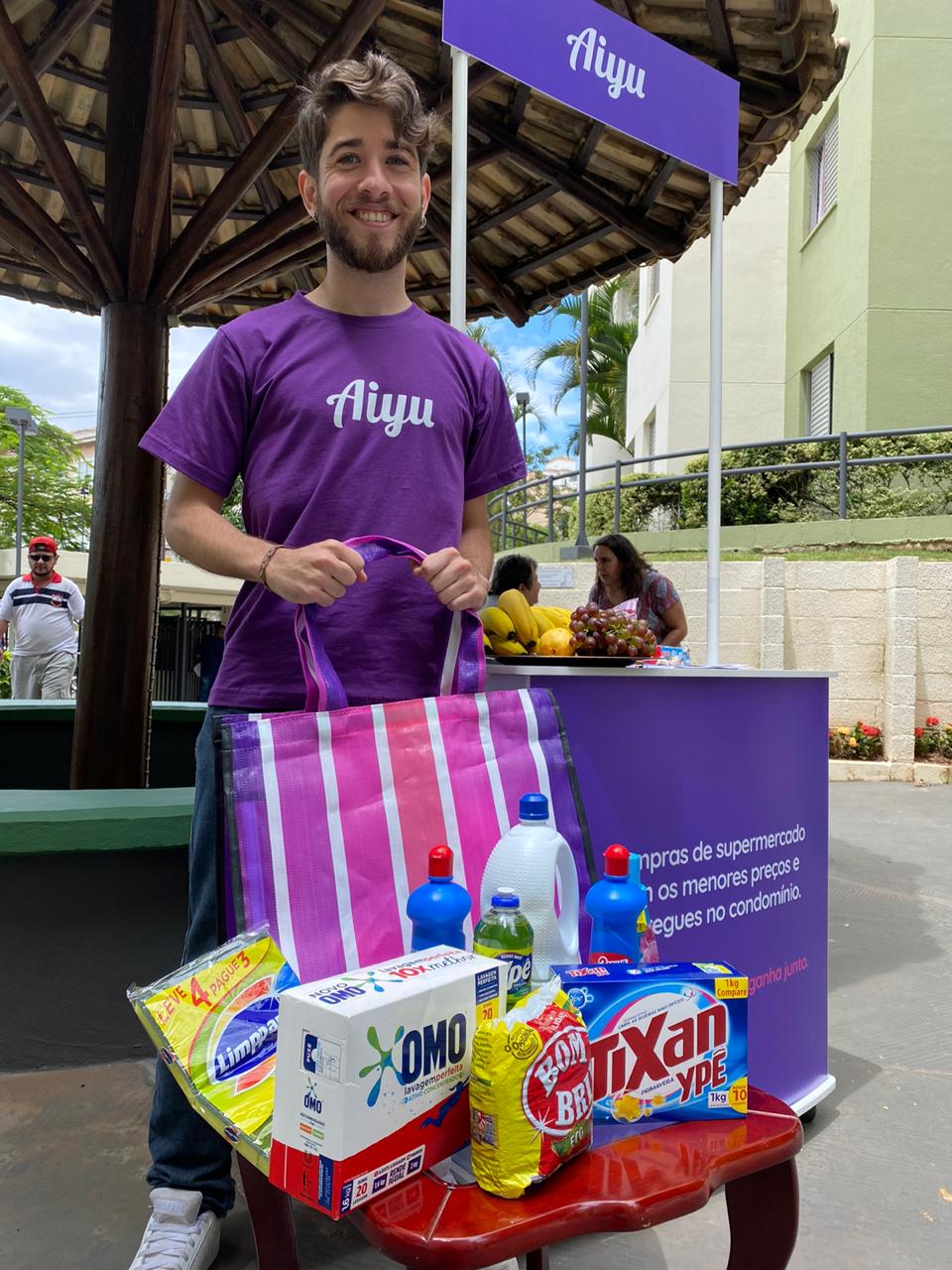
Khevin during the Aiyu era — the diagnostic weeks before the rebrand.

I joined as Lead Designer between my freelance years and the consulting work that came after. The first six weeks were diagnostic — reading the existing Aiyu identity, watching the partner app in real hands, talking to the operations team about what the inherited internal tools couldn’t do.

Four work-streams emerged from that diagnosis: a rebrand, a redesign of the partner app, a public website, and a set of internal tools to replace the licensed software that wouldn’t integrate with the overnight-fulfillment pipeline. They ran in parallel for the rest of the year.

02. From Aiyu, to Favo

From Aiyu, to Favo.

The rebrand started in the first month and converged by the second. Aiyu had grown unevenly — inconsistent across touchpoints, with a name that didn’t say what the company did. The visual language read as outdated. The work was structural, not cosmetic.

I ran archetype workshops with the team. Gathered attributes from interviews on both sides of the network — the líderes and their customers. Tested three concept directions. The team converged on a system named Favo — Portuguese for honeycomb. The metaphor fit the model the company already was. The wordmark, the palette, and the voice were rebuilt to match.

The Aiyu wordmark — the brand the company outgrew.
The Favo wordmark — anchored in the honeycomb metaphor of community commerce.

The system carried into every surface the company touched — packaging, signage, the warehouse floor, the líder’s phone, the customer’s receipt.

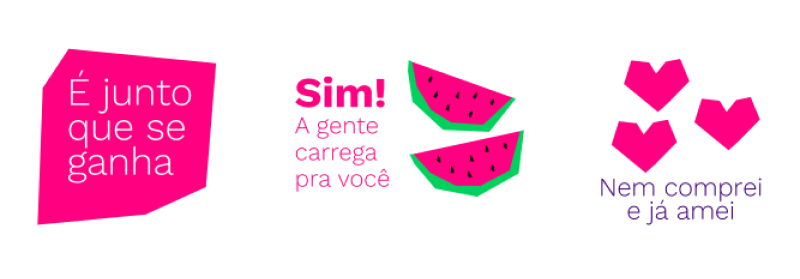
The Favo brand system — wordmark, monogram, color, illustration, and the supporting elements applied across surfaces.

“Aiyu was a company doing real work with no name to match. The rebrand wasn’t cosmetic — it was rebuilding the brand to carry the operation it had grown into.”

03. The product, in parallel

The partner app, the website, and the internal tools — in parallel.

The partner app ran the entire engagement. The website joined in month four. The internal tools came in month eight. The work was sequential to start with each work-stream and parallel after they overlapped — brand and partner-app first, website added at month four, internal tools at month eight, all four threading together by the end of the year.

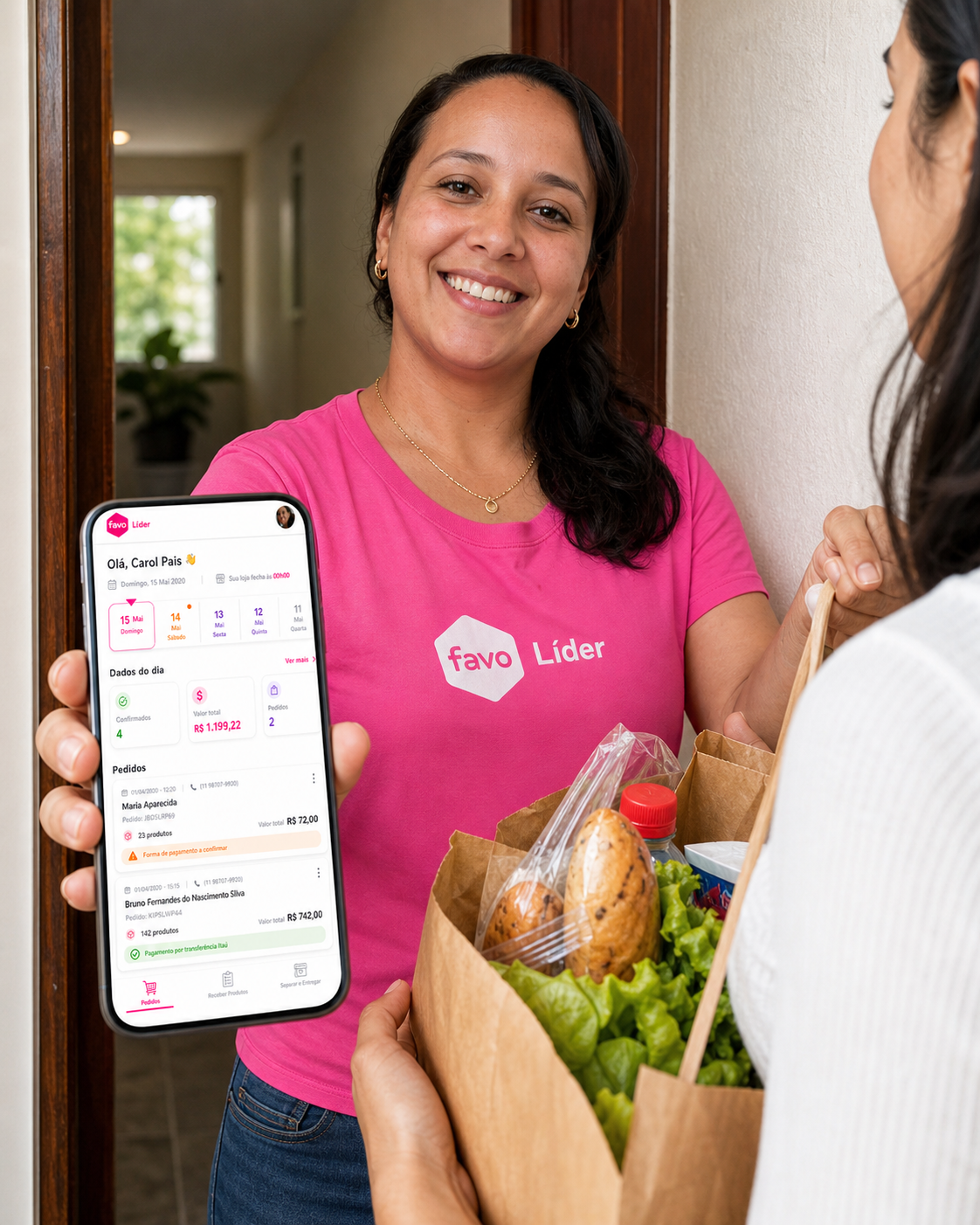
A Favo líder — one of the local entrepreneurs running their own catalog from the partner app.

The partner app was the surface a local entrepreneur opened forty times a day. Catalog, orders, deliveries, customer messages — one app carrying the whole operation, on phones with limited memory, in markets with intermittent connectivity.

I ran over a thousand interviews and surveys across both countries during the redesign. The pattern was consistent: people wanted direct sales and entrepreneurship, but didn’t know how to take the first step. Existing apps had logistics tools or storefronts, never both, never holistically. The redesign closed that gap.

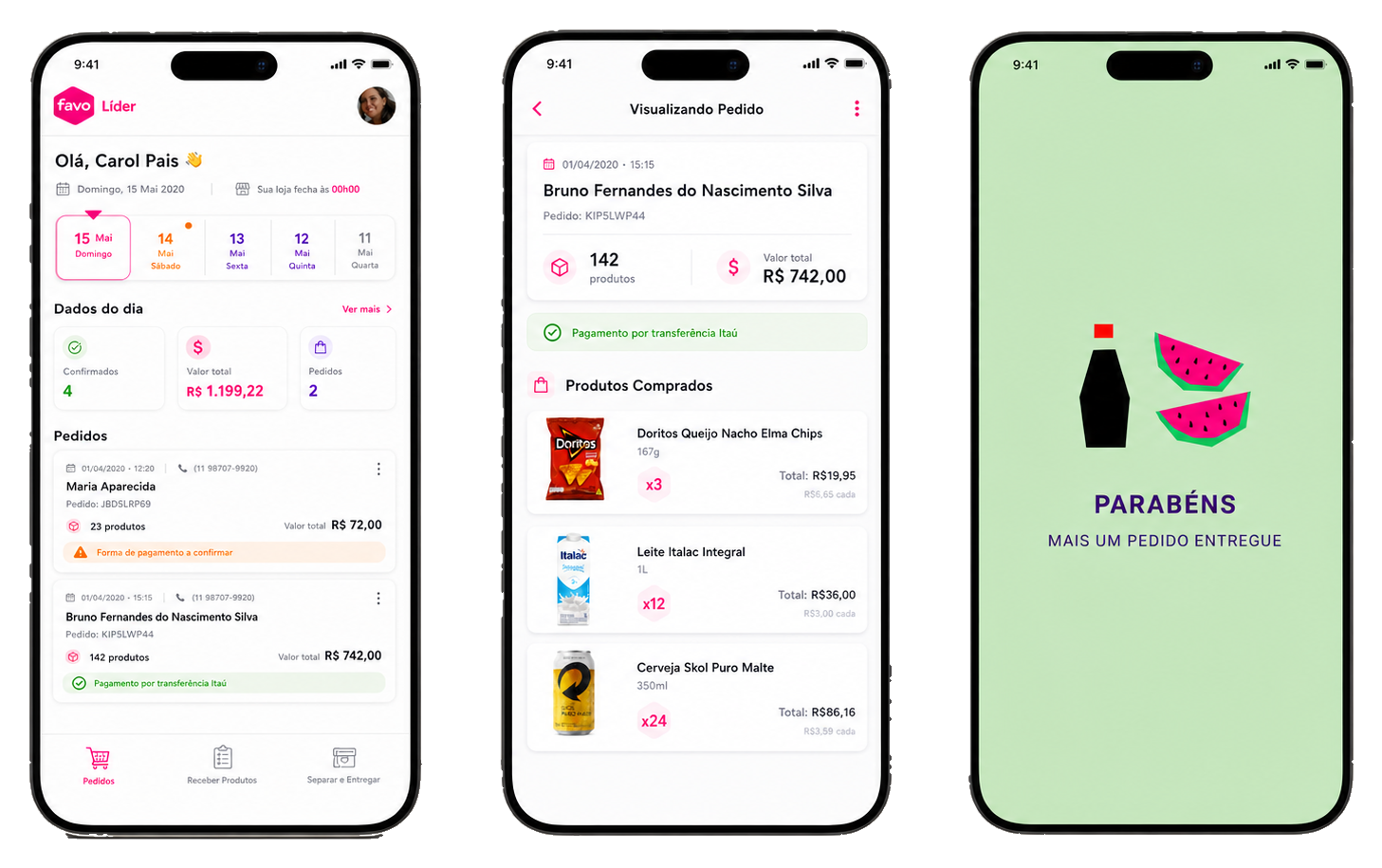
The Favo partner app — catalog, orders, and delivery surfaces, used by 13,000 community entrepreneurs across Brazil and Peru.

The public website joined in month four. Marketing pages, partner-recruitment flows, customer-facing storefront entry points, support content. The website carried the brand into the consumer-facing layer that the partner app didn’t reach — how a new customer found out Favo existed, what they understood about the model in their first thirty seconds, what made them trust a stranger to deliver their groceries.

The internal tools came in month eight. We made the call to build a custom Product Information Management system and Warehouse Management System rather than license off-the-shelf software, because the existing tools wouldn’t integrate cleanly with our overnight-fulfillment infrastructure. The decision was a real trade — build cost up-front, maintenance burden ongoing, against the ceiling that off-the-shelf would have hit within six months. The build paid for itself by the end of the year.

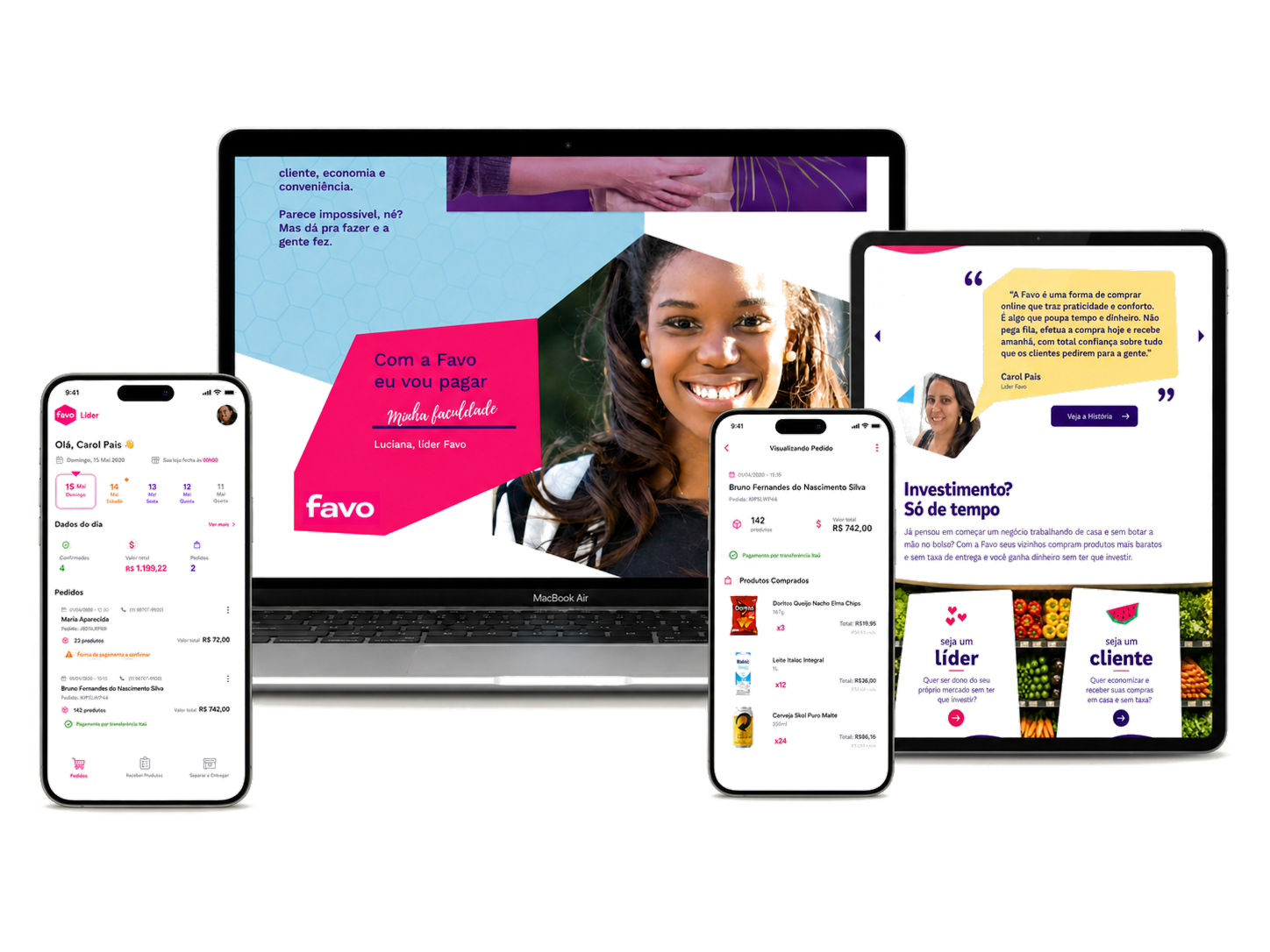
The Favo internal tools — PIM and WMS surfaces shown across phone, tablet, and desktop, built in-house to match the overnight-fulfillment workflow.
04. Where it landed

Zero to 1.2 million across Brazil and Peru.

The rebrand and the redesigned surfaces shipped in lockstep. Within the first year post-rebrand, Favo’s active customer base went from zero to 1.2 million — the company had been counting customers under Aiyu, and the rebrand effectively reset the count, but the new system carried the existing 160,000 along with it and the next year added another million. Net Promoter Score moved from 63 to 77 in the first three months and reached 86 by the end of the year. Active community entrepreneurs grew from a thousand to thirteen thousand in the same window. The company entered São Paulo and Lima as new markets and lifted market share by 10%.

1.2M
Active customers across Brazil and Peru, post-rebrand. From zero counted under the new brand.
63 86
Net Promoter Score — first year. Reached 77 within the first three months of the rebrand.
13K
Active community entrepreneurs running their own catalogs on the partner app, up from a thousand at start.

Looking back: a rebrand, a partner app, a website, and a set of internal tools — built across roughly a year, mostly in parallel, mostly during the pandemic. The work was the work; the calendar carried it.