We redesigned three apps for Spaces
and built one shared system underneath.

Spaces runs contactless parking from New York to Texas to the West Coast. We redesigned its three apps — admin, operator, parker — and the design system underneath them.

RoleSenior Designer · Manager · Lead Product
Team3 designers — myself + 2 reports
IndustryPrivate parking · operations
RegionNYC · Texas · West Coast
Duration6 months
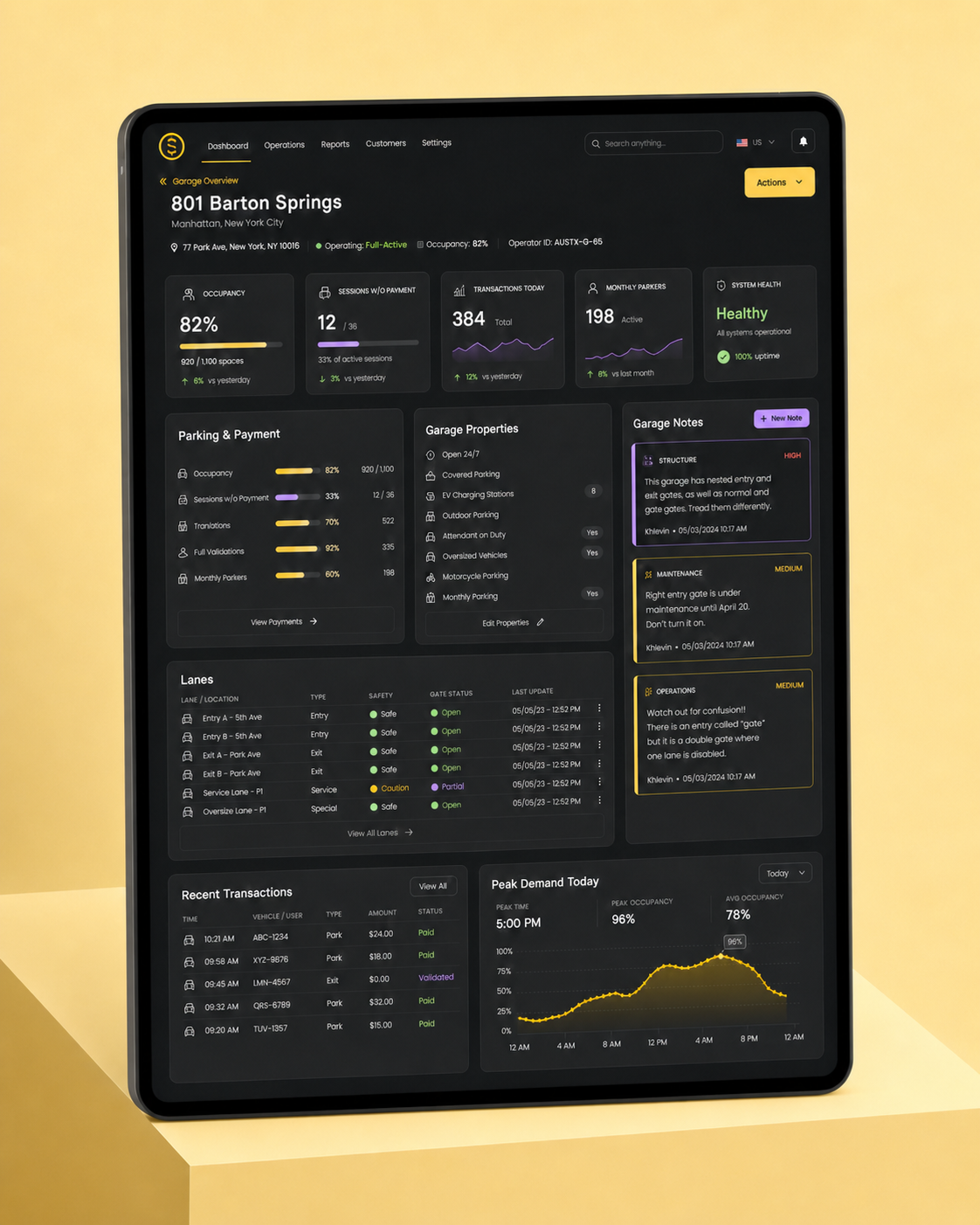
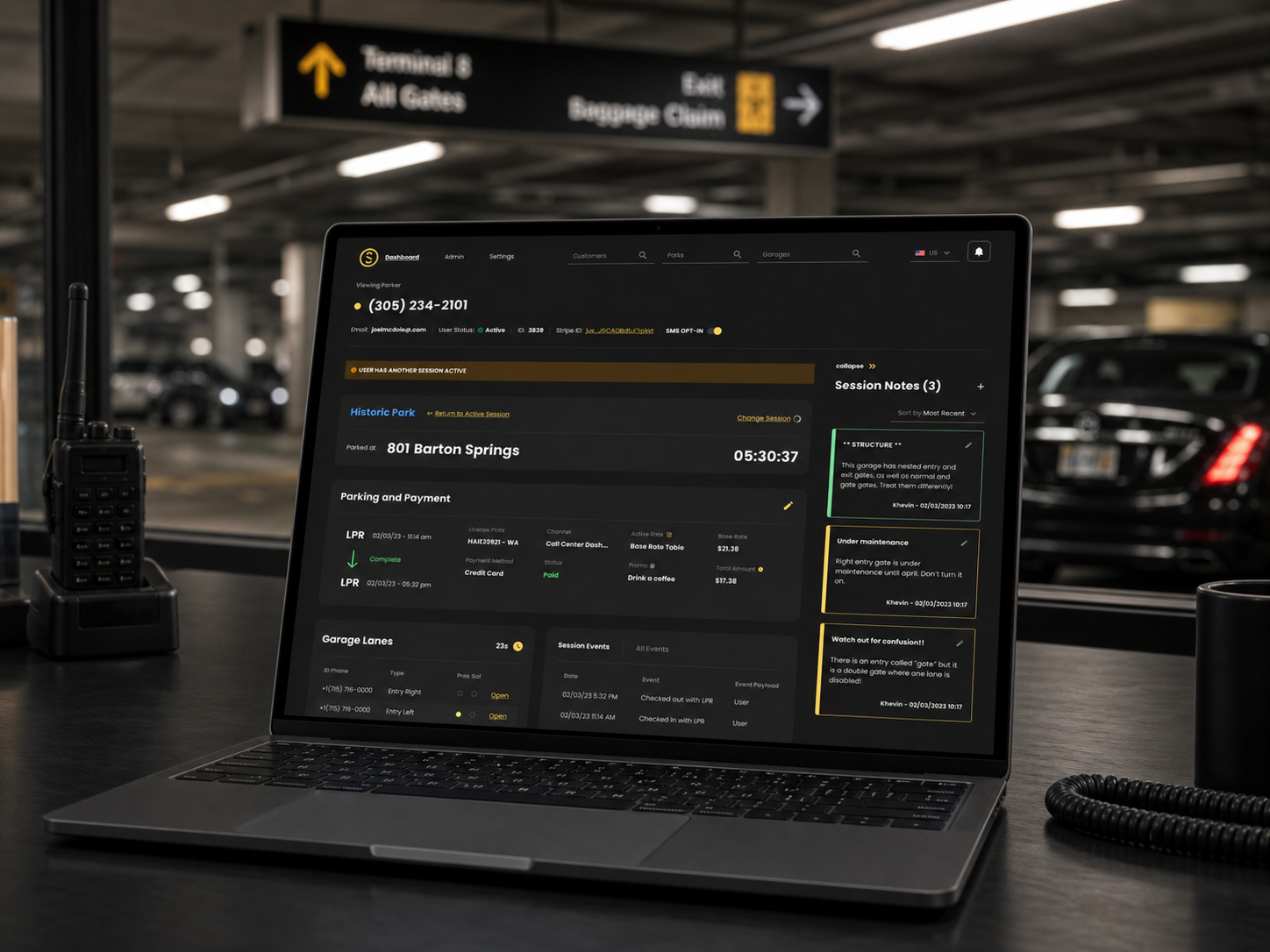
Admin Portal V2.0 — multi-region operations view, the wide cinematic surface call-center staff opened every shift.
Admin V2.0 in dark mode. The inherited screens had crammed five years of features into cluttered light-mode cards. This one breathes — one library, multi-region data, work that scans.

Three big
takeaways

  1. 01

    We redesigned three apps — admin, operator, parker — from a starting point of zero documentation.

  2. 02

    We built a shared component library before we earned the right to redesign.

  3. 03

    The call center resolved 20 % more tickets per day after rollout. Spaces expanded to Europe on the same surface.

01. What we inherited

We inherited five years of feature work without a system.

When I joined Spaces, the company was already running contactless parking across New York City, Texas, and the West Coast. The tech worked — phone-based access, payment, exit. The design didn’t. Three apps had been built without design: the admin portal the call center used, the operator portal garage staff used during shifts, and the parker app end users tapped to pay. Five years of feature work, no system underneath.

I came in as senior designer and design manager. Two designers reported to me. The job was to rebuild the design layer, ship better tools, and earn the redesign by getting the system right first.
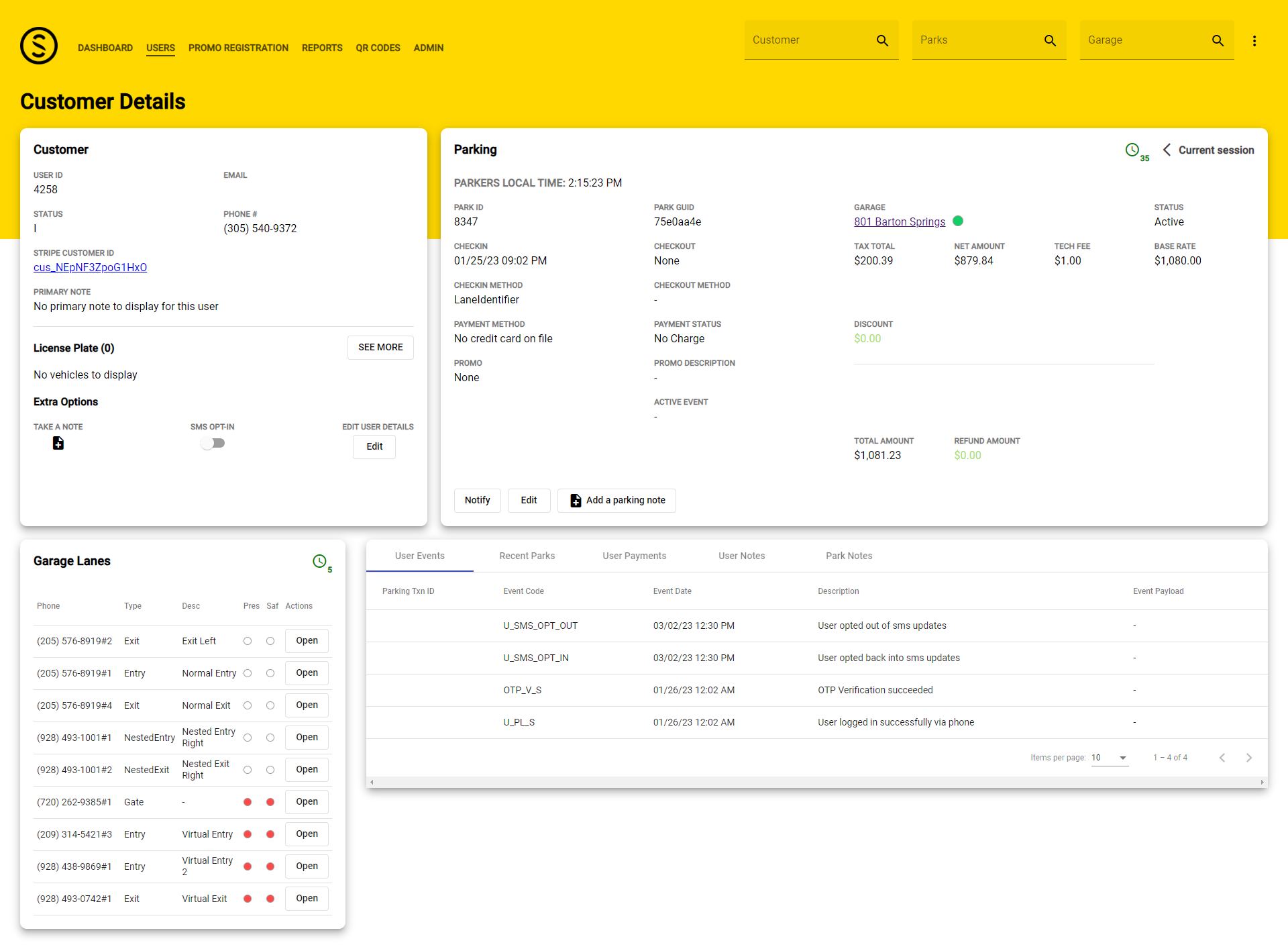
A customer-details screen from the inherited admin portal — too much information per page, undocumented flows, cards layered without a system.
Before The customer-details screen we inherited — five years of features stacked into light-mode cards, no system underneath.

The call center had inherited a Frankenstein’s monster. Five years of feature accumulation — feature on feature on feature — had produced screens like the one above. Too much information per page. Crappy cards stacked without a system. Flows nobody could trace, nobody could explain, nobody could enter without already knowing they existed.

Operators worked from tablets and laptops. There was no mobile web app — no clean answer to “I’m on the garage floor and I need to fix this now.” The problem wasn’t access. The problem was that every screen had become a graveyard of features added without anyone removing the old ones.

The un-building happened on three fronts at once. We documented what was actually shipping. We built a component library that would evolve into a full system. And we sat with the call center, operations, and business analysis until we agreed on which features were load-bearing and which had grown out of accident.
02. One library, then a re-conceptualization

We built the library before we earned the redesign.

We considered jumping straight to redesigning screens. The screens were the most visible problem, and the stakeholders wanted relief fast. We picked the slower path. Without the library, every fix would have been local and every regression inevitable. The library was the contract that earned the redesign.

We started with research. Dozens of interviews with call-center support and operations agents. They needed better ways to handle the basics — opening lanes, issuing refunds, verifying payments. Operators needed real-time support during shifts. The library accounted for both surfaces — desk-bound and on-the-ground — using the same primitives.

“The brief was straightforward. Reimagine the portal from scratch. Address the usability problems. Bring modern patterns. Keep the workflow operators already knew.”

Once the foundation held, parts of the admin portal still needed more than incremental updates. The existing flows ran deep through five years of feature work; minor tweaks couldn’t reach the usability we wanted. We went back to first principles and rebuilt — adding features the original constraints had ruled out, alongside cleaner navigation, better reporting, and more efficient task management.

Admin Portal V2.0 — the redesigned daily view, the surface call-center staff opened every shift.

Multi-region rollout under one component library. Same system, regional data, one shared surface — and the foundation for the next round of growth.

03. What it changed

Operators stopped fighting the tool. We shifted the support load.

The biggest shift was measurable. The call center resolved 20% more support tickets per day after rollout. The team finally had time to handle the cases that had been sitting in the queue. The rebuild also opened the next move — first across the United States, then to Europe.

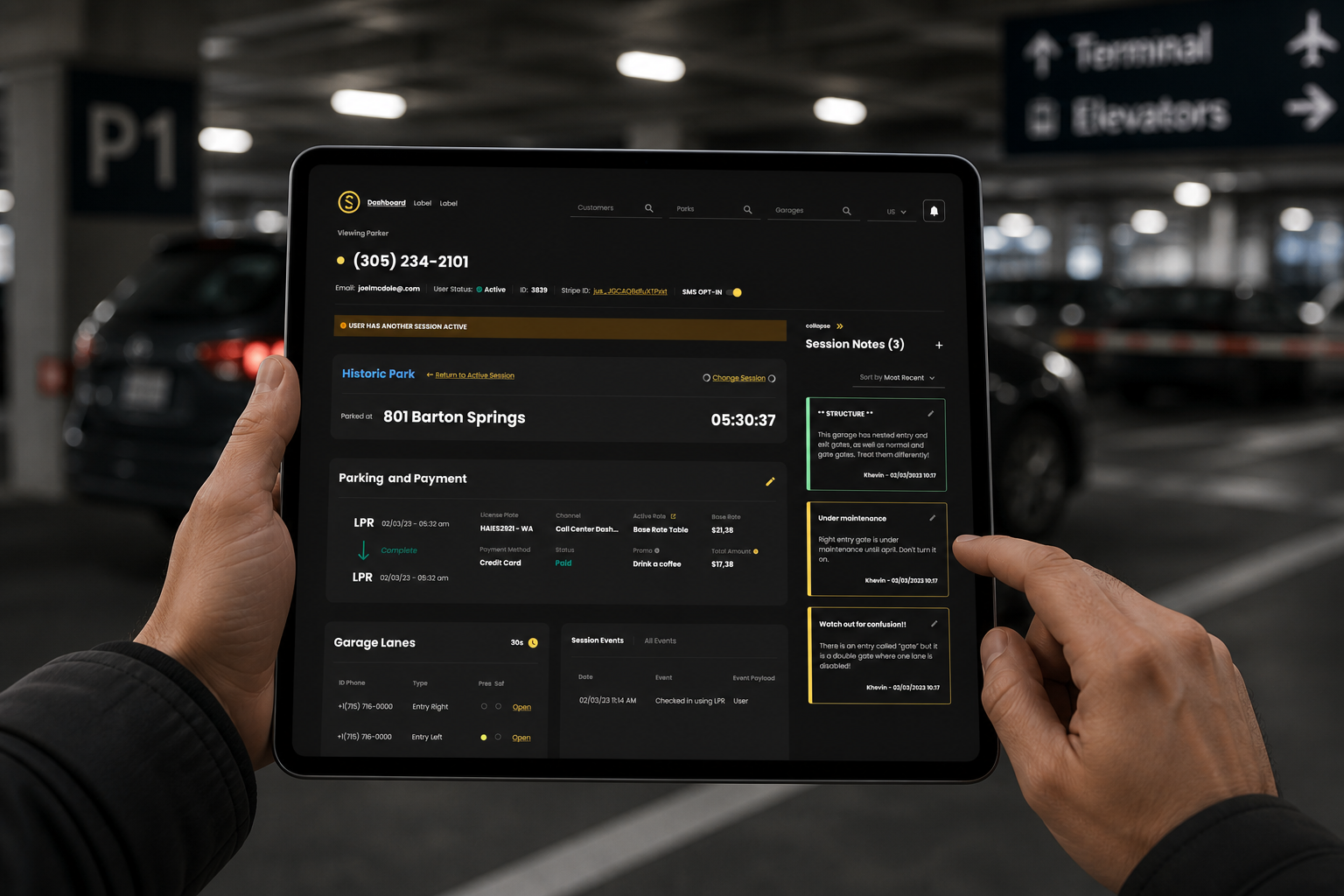
Admin Portal V2.0 — multi-region operations dashboard.
The redesigned admin surface in operator hands, on an iPad in the garage.

What the redesign delivered, beyond the metric, was the absence of friction. Operators stopped asking “how does this work” for the basics — opening lanes, refunding sessions, looking up garage history — because the library put those affordances in the same place every time. We tested for it. We shadowed call-center sessions before and after rollout. We timed common tasks. We watched where operators paused. The pauses got shorter. The escalations to engineering for “is this supposed to do this” fell off.

Handoff was the real test. The two designers I’d been leading carried the system forward without me in the room. Engineering adopted the library as the source of truth for new feature work. The business-analysis team began writing requirements against the patterns rather than against screens. When Spaces expanded into Europe a year later, the new market launched on the same surface — not a fork. Forking had been the original plan, and would have been the cost we were trying to avoid.

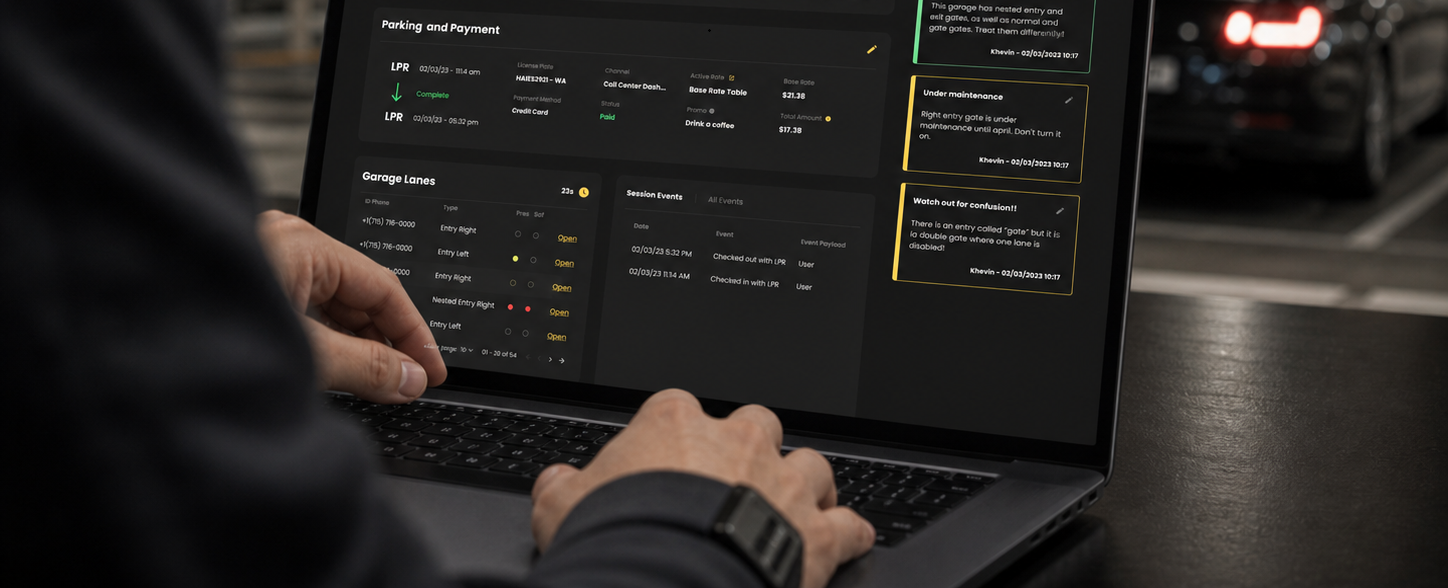
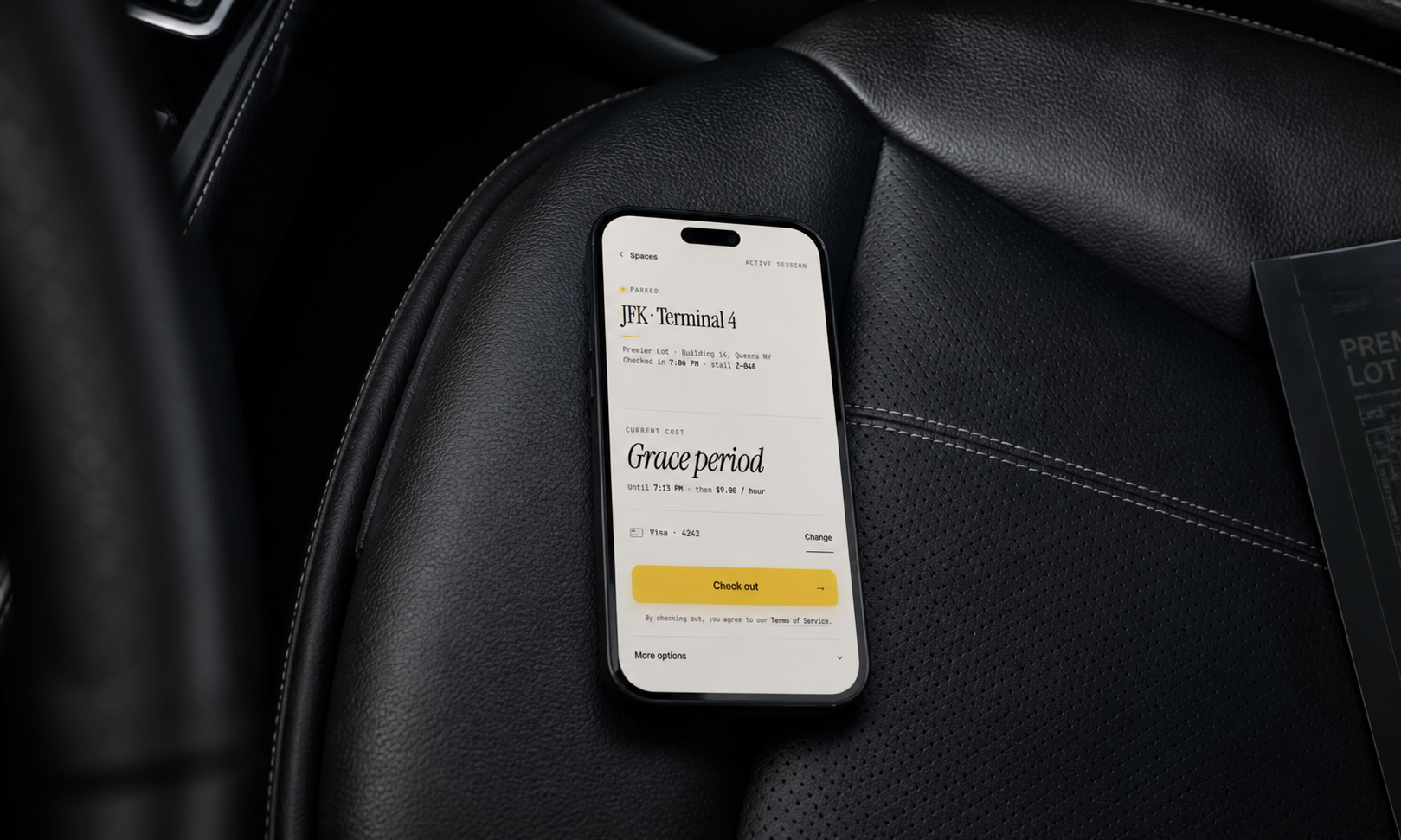
The mobile companion view — same component library, mobile-first composition.
+20%
Support tickets resolved per day after rollout. The call-center capacity the rebuild gave back.
3
Apps unified under one library — admin, operator, parker. Shared primitives across all three.
US EU
The expansion the rebuild made possible. Same system, regional data, no fork.

The groundwork is what made it durable. The cleanup, the documentation, the library — all of it became the foundation for the redesigns and the systems work that came after. Sit down. Do the work. The rest follows.